









What Is a Commercial Intelligence System?
And Does Your Team Need One?
Most commercial teams have data. Sales data in Salesforce. Marketing data in the MAP. Finance data in the ERP. Operations data somewhere else entirely. And a shared drive full of Excel files that nobody officially acknowledges but everyone actually uses.
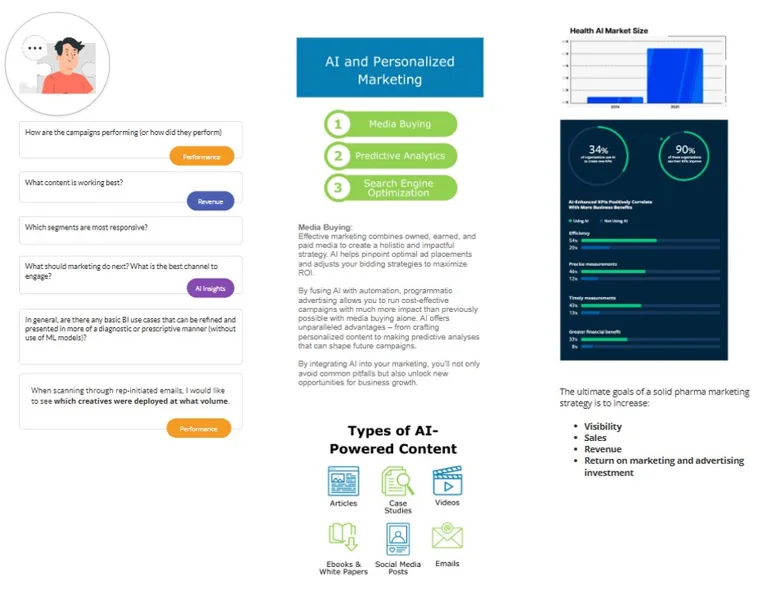
What most commercial teams don’t have is a commercial intelligence system — a live, integrated view of performance that connects all of those data sources into one place and surfaces the information your commercial leaders need to make decisions in real time, without analyst involvement.
There’s a meaningful difference between a commercial dashboard and a commercial intelligence system. Understanding that difference is the first step toward building something that actually changes how your business makes decisions.
Dashboard vs. Intelligence System
A commercial dashboard shows you what happened. Revenue this quarter. Calls made this week. Pipeline by stage. It’s retrospective, it’s descriptive, and it requires a human to look at it, interpret it, and decide what to do.
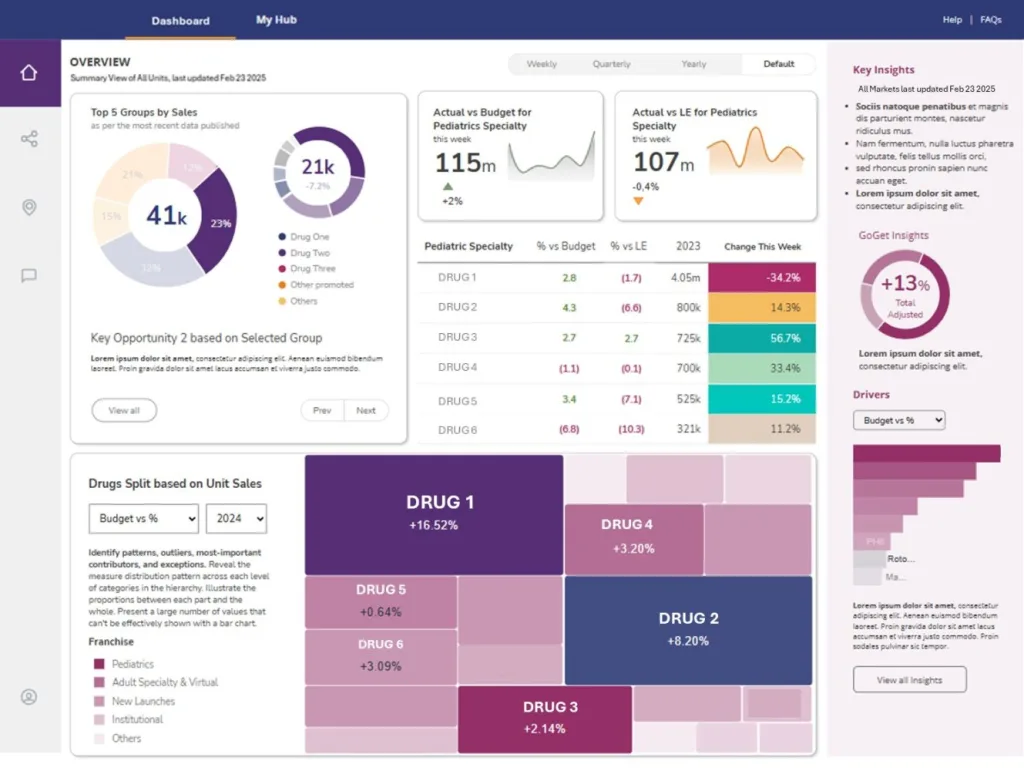
A commercial intelligence system shows you what’s happening, why it’s happening, and what to do about it. It connects sales performance to marketing activity to operational data to external market signals — and it surfaces the insight at the moment the decision needs to be made, in the context where the decision-maker is already working.
The difference is not primarily a technology difference. It’s an architecture difference. A commercial intelligence system is designed around the decisions it needs to support — not the data it has available.
What a Commercial Intelligence System Actually Contains
The components vary by industry, but most commercial intelligence systems share the same core architecture:
A unified performance view. Sales, marketing, and operations data connected in one place, with consistent metric definitions across all three. Not three separate dashboards that have to be manually reconciled — one environment where the commercial team works from a shared picture of reality.
A segmentation and targeting layer. Whether you’re segmenting HCPs in pharma, franchisees in restaurant, accounts in B2B, or consumers in CPG — a commercial intelligence system has a live, dynamic segmentation engine that tells your commercial team who to focus on, why, and in what order.
Performance diagnostics. Not just “revenue is down 8%” but “revenue is down 8% because these three accounts declined, which correlates with these two factors, which your team can act on in these specific ways.” The intelligence layer connects outcomes to causes to actions.
Operational signals. The external data that gives commercial context to internal performance — market data, competitive signals, economic indicators, whatever is relevant to your industry. In pharma, that might be formulary changes and competitive launch activity. In franchise, it might be foot traffic data and local market conditions.
A delivery mechanism that fits the workflow. The most sophisticated intelligence system in the world fails if the people who need it have to open a separate application to use it. A commercial intelligence system delivers the right insight to the right person at the moment they need it — in their email, in their Slack, in their CRM, in the meeting they’re sitting in.
The Pharma Commercial Intelligence Case
In specialty pharma, commercial teams are managing territory performance, HCP targeting, market access, and launch tracking — all at the same time, all from different data sources, all with different levels of data freshness and reliability.
A commercial intelligence system for a specialty pharma team typically unifies prescriber data, claims data, CRM activity, formulary status, and specialty distributor movement into one live environment. The field team sees their targeting priorities updated daily based on prescribing behavior and access signals. Commercial leadership sees launch trajectory against benchmark in real time. Market access sees coverage changes the day they happen instead of weeks later.
The result isn’t just better dashboards. It’s a commercial team that operates from one shared picture of reality instead of six different systems, and that spends its meeting time on decisions rather than on data reconciliation.
The Franchise Commercial Intelligence Case
In franchise and restaurant, commercial intelligence looks different but follows the same logic. Franchisee performance, location-level sales, daypart trends, menu item performance, guest frequency, and labor efficiency — all connected in one view that operators and brand leaders share.
The key diagnostic question for franchise brands: how long does it take your operations team to identify an underperforming location, understand why it’s underperforming, and communicate a specific action plan to that franchisee? If the answer is “weeks,” you have a commercial intelligence gap. A properly built system makes that cycle a day, not weeks — because the data is live, the diagnostics are built in, and the action is visible without manual analysis.
What It Takes to Build One
The technology for commercial intelligence systems has been available for years. Tableau, Snowflake, dbt — the stack is mature and accessible. What most organizations are missing isn’t the platform. It’s three things:
Clarity on the decisions it needs to support. A commercial intelligence system that isn’t designed around specific decisions produces sophisticated-looking reports that don’t change behavior. Before any technical work begins, the design question is: which five decisions does your commercial team make repeatedly, and what information do they need — in what form, on what cadence — to make them well?
A unified data layer. Commercial intelligence requires connecting data sources that were never designed to talk to each other. Building the transformation layer that unifies CRM, finance, operations, and market data into a consistent, trusted foundation is the majority of the technical work — and it’s where most implementations fail if they try to rush past it.
Someone who understands both the commercial domain and the data architecture. The hardest thing about building a commercial intelligence system is that it requires expertise in two things that rarely live in the same person: deep understanding of how commercial organizations make decisions, and technical capability to build the data infrastructure that supports them. Most organizations either have great commercial experts who don’t know how to build the system, or great engineers who don’t understand the commercial domain well enough to know what to build.
This is the gap Rower fills. We’ve built commercial intelligence systems across specialty pharma, franchise restaurant brands, CPG, and private equity portfolio companies. The pattern is consistent: organizations that make the investment get faster decisions, better commercial execution, and a data team that spends its time on analysis rather than on data assembly.
If you want to see what a commercial intelligence system looks like in your industry, we’re happy to walk you through what we’ve built for similar organizations.
Request a Conversation →