









Silos exist in pharma for good reasons — regulation, compliance, separation of duties. Nobody is arguing they should come down. But the assumption that data can’t move intelligently across those boundaries? That’s costing pharma companies speed, insight, and money.
The Real Problem Isn’t the Silo
Walk into almost any pharma commercial organization and you’ll find the same pattern. Quality has its system. R&D has its system. Manufacturing has its system. Commercial has its system. They’re all doing their jobs. They’re all, in isolation, compliant.
But when a sales rep needs to know who to call this week — and why — they’re pulling from four different places, reconciling spreadsheets, and making a judgment call on incomplete information. The silo isn’t the failure. The failure is that no one built a bridge.
Systems do.
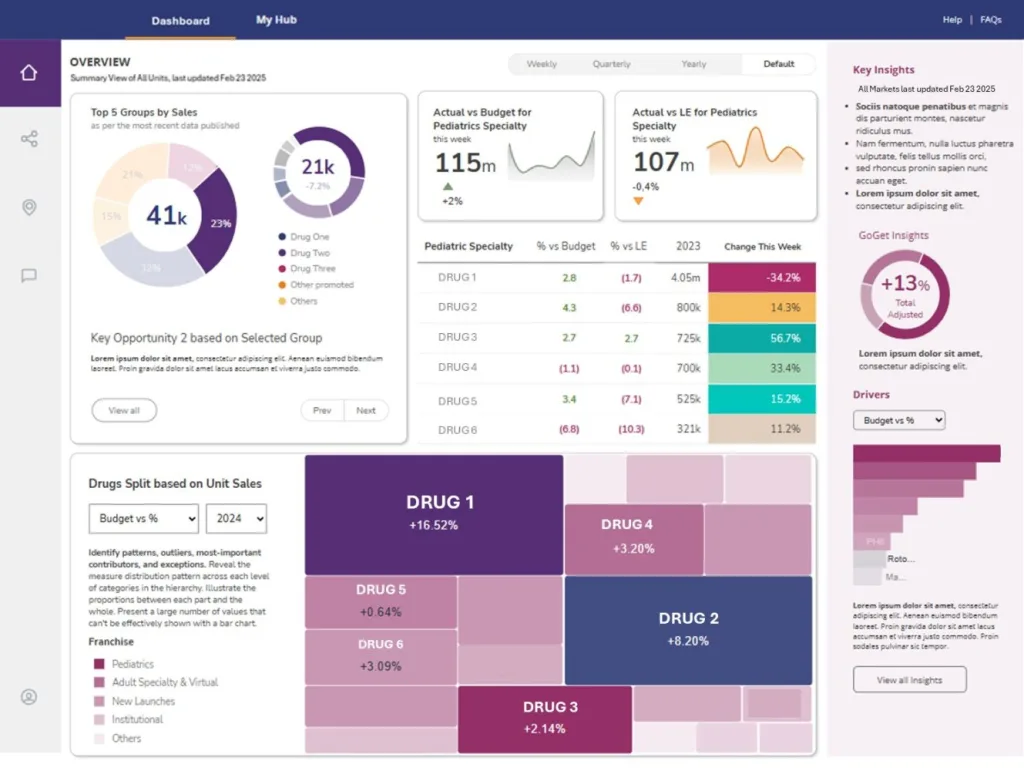
A dashboard is a project. A platform that connects quality, commercial, R&D, manufacturing, and market access — role-based, compliant, with a recommendation engine that tells sales exactly who to call and why — that’s a system. That’s transformation.
What We Built
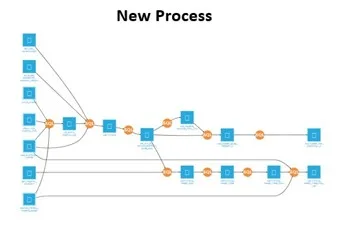
For a pharma commercial client, Rower built exactly that. Not a dashboard. Not a reporting layer. A unified analytics platform that brought together five functions that had never shared a single interface — while keeping every silo structurally intact.
Unify quality, commercial, R&D, manufacturing, and market access data in one platform. Role-based access — every team sees what they need, nothing they shouldn’t. Compliant from day one. And a recommendation engine that surfaces the right insights for sales reps at the right moment, without requiring them to go looking.
Five Functions. One System.
The platform wasn’t built around a single team’s needs. It was architected as a system — serving every function differently, but drawing from a single unified data layer underneath.
Safety signals and quality metrics surfaced in context — without exposing regulated data outside its appropriate access tier.
A recommendation engine tells reps who to prioritize, why, and with what message — built from signals across all five functions.
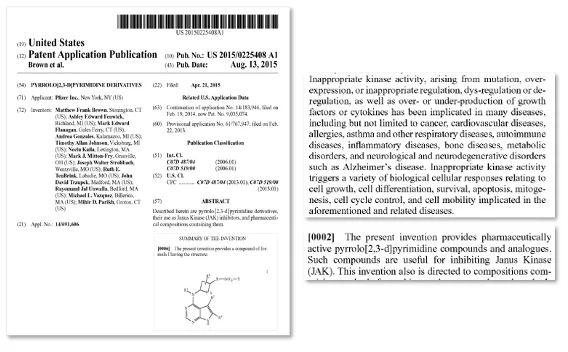
Clinical and pipeline data made visible to commercial teams in a form they can actually use — without compromising trial integrity.
Operational data that informs commercial decisions — backorders, launch timelines, supply constraints — surfaced before they become problems.
Access and coverage data connected to the sales workflow — so reps understand the access landscape for every account, not just the product story.
The Data Behind the Decision
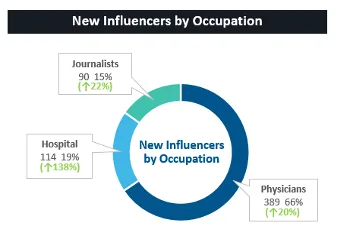
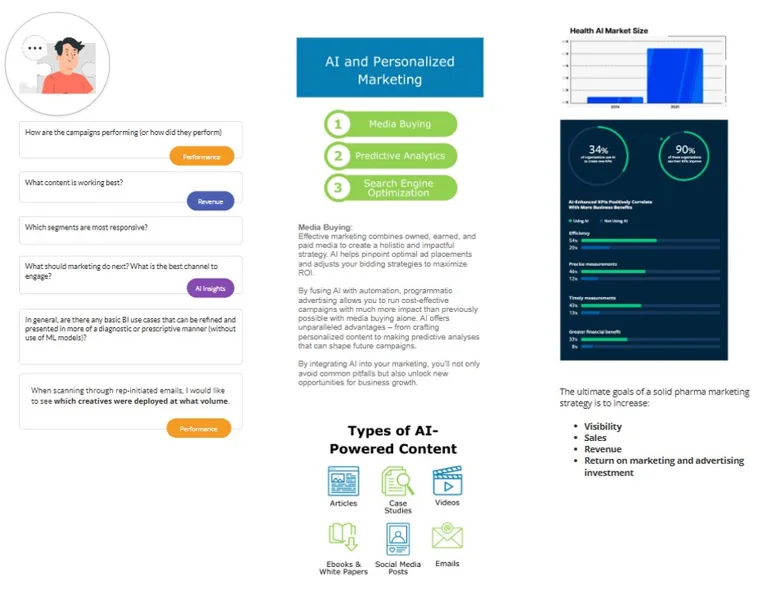
The business case for this kind of integration is measurable.
Organizations that build feedback loops into their systems don’t just get better reporting. They get compounding returns. Each decision informs the next one. That’s what a system does that a project never can.
How the Silos Stay Intact
The most important design principle in this build wasn’t integration — it was role-based separation. Every team accesses the platform through a view built for their function. A quality manager doesn’t see commercial compensation data. A sales rep doesn’t see unpublished trial results. The walls don’t come down. They just stop blocking the flow of useful information.
The regulatory boundary and the intelligence boundary are not the same thing. You can honor both — a compliant data architecture and a platform that makes every team smarter — if you build it as a system rather than a collection of dashboards.
Five functions. One platform. Role-based access that keeps every silo structurally compliant. A recommendation engine that surfaces the right insight for every sales rep, grounded in data from across the entire organization. Not a dashboard. A system.
What This Means for Your Organization
If your commercial team is still reconciling spreadsheets before every call plan, the silo isn’t your problem. The absence of a system is. The silos will still be there when you’re done — they should be. But your teams will stop working around them and start working through them.
That’s not a technology decision. It’s a strategy decision. And it starts with deciding whether you want to keep buying projects or start building systems.
Technologies & Partners